I try my best to make nursing fun and lighthearted. But as we all know, it can’t always be that way. We are taking care of real patients with real problems, and bad things happen everyday. Patients are going to get broken bones and have to deal with a stroke or heart attack. They will get bad infections and diagnoses of cancer. Sometimes, patients will die. It sucks, but unfortunately that’s the way it goes. It’s very unlikely that you’re going to go through your entire nursing career without having a patient die. Depending on your specialty, you might see many patients pass on.
The first time one of my patients died was on my 3rd week of orientation in the medical ICU. I was fresh out of nursing school and still trying to get my bearings. I was barely able to find supplies, much less deal with a patient death.
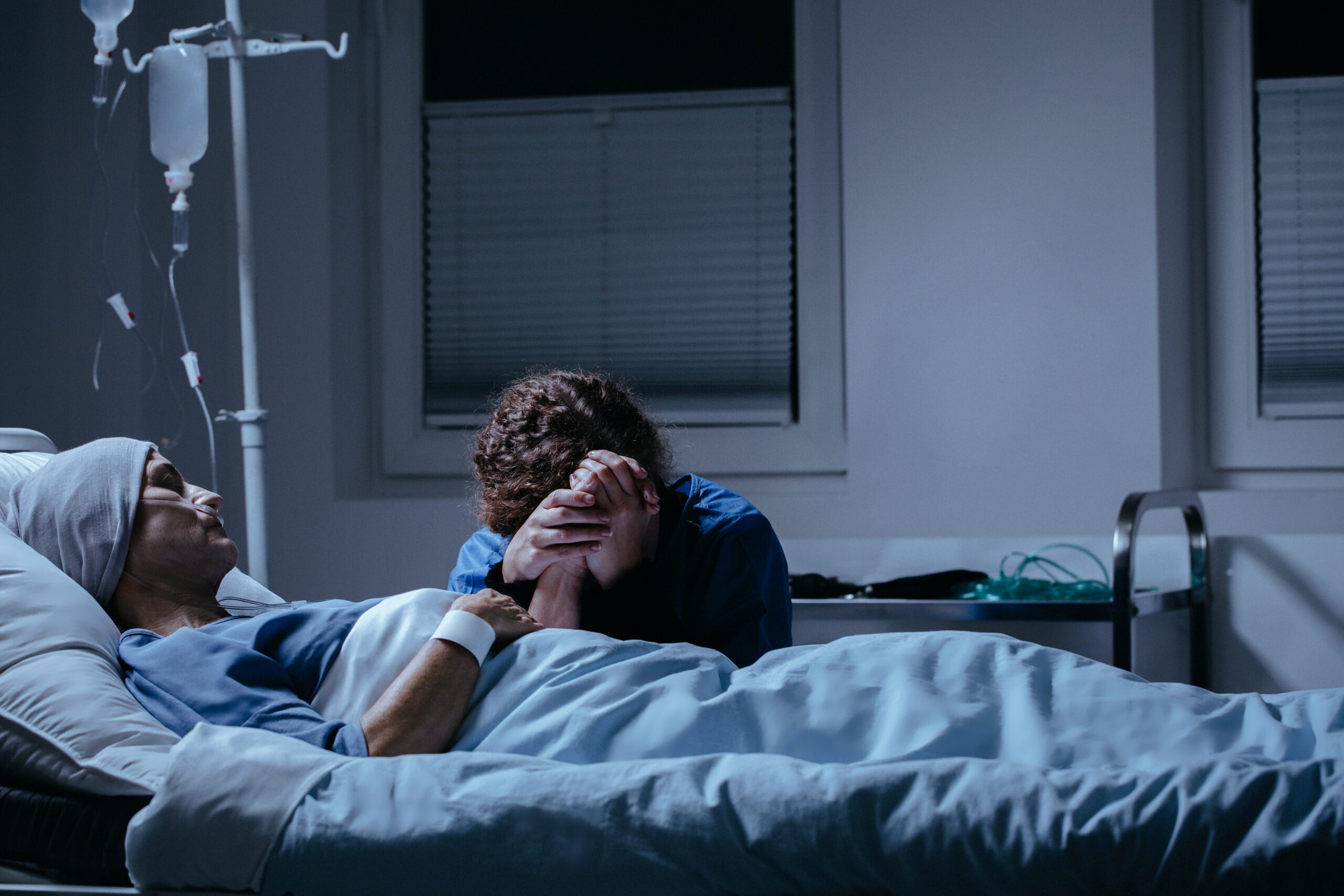
The daughter of the patient sat in the chair next to the bed and stared at the monitors. Her mother was on the ventilator after being found down at home. Her brain was without oxygen for an unknown amount of time. A neighbor found her and called 911, who miraculously brought her back to life with CPR.
But now her brain showed no activity. Her daughter was the only family that could make it in from out of town, and she decided it was time to let her mother go. My preceptor and I gave her as much time as she needed before calling us back in.
We explained to her what would happen after withdrawing care and answered any questions that she had. When she was ready, we called in the respiratory therapist to extubate her mother.
Within 30 seconds, you could start seeing the oxygen saturation drop. In a couple of minutes, the ekg started showing changes. By 5 minutes, the O2 Sat could no longer be picked up and she was in a junctional rhythm with no blood pressure. The heart rate went down from 40 to 30 to 10 to 0.
I was staring at the monitor the entire time. I looked over at the daughter, and realized that she hadn’t seen any of it. She was staring at her mother and never looked away. It was medical to me, but it was life to her.
I wish I could tell you how amazing I was at comforting her and healing her pain. But I was just 3 weeks out of school and a little overwhelmed. Fortunately, I had a great preceptor who showed me how to be a nurse that day.
My preceptor stayed at the daughters side through everything, holding her hand, comforting her. After giving her some time alone with her mother, she stepped out and thanked both of us. My preceptor hugged and her and both of them started to tear up a little.
That patients daughter will never forget my preceptor and the way she helped her through such a tough time. She made a huge impact that day. See, being a nurse isn’t just about giving medications and putting in IVs. It’s about taking care of patients and their families. It’s about being their advocate and making sure they are treated as they should.
Since that day, I’ve seen many patients take their last breath…more than I could keep track of. I remember most of their faces, but I’m sure a few have slipped from my subconscious. But each death brought with it a different set of challenges, and they have all helped make me the nurse I am today.
When your time comes to comfort a dying patient and a grieving family, be sensitive to their needs. Every situation is different. The family will give you plenty of non-verbal cues that will tell you how much involvement they want you to have.
If it’s just the patient, make sure they don’t die alone. Be by their side and hold their hand, even if you don’t think they’ll know one way or the other.
If it’s just one or two family members at the bed side, try to stay as close as they’ll let you. Guide them through the process and keep them comfortable. Make sure they know that you will be there for them at any time.
If the patient has a larger group there, you might be better off staying on the sidelines. Offer your support and show them you care, but don’t hang around too long if it’s clear that they don’t need you there.
Id hate to use a cliché, but it’s true that everyone grieves in their own way. Sometimes, a patient’s family will want you there the entire time, needing that extra support. Other times, families will lean on each other and only need you to take care of “nursing stuff.” You’ll know which type of family you’re dealing with pretty quickly into the process.
Keep in mind that withdrawal of care doesn’t always mean that the patient is going to die as soon as they get the tube pulled. It could take several hours or days to finally end. It’s not out of the realm of possibility for them to live for a lot longer after withdrawal. I’ve had patients get extubated, start breathing on their own, and have to get sent to hospice or a long-term facility because their bodies simply won’t let go.
You won’t always have a warning when a patient is going to die. If you thought withdrawing care was bad, wait until you get a patient who was doing fine shortly before their death. They can come in as traumas, strokes, heart attacks, etc. For obvious reasons, these unexpected deaths are a huge shock for the families.
No matter what the reason for a patient taking their last breath, the most important thing you can do for the family is to just be there. Show them that you care and that you understand what they’re going through. Answer their questions and make sure there are plenty of tissues.
If the patient passes before the family gets there, be respectful. Make sure they are dressed in a comfortable looking position and covered up. Clean them up as much as possible, make sure their eyes are closed, and dim the lighting if you can.
Sometimes, the patient’s body must go through an autopsy by the medical examiner. Often referred to as an “M.E. case,” you may have to leave everything on the patient as is. This usually means leaving IVs, the endotracheal tube, foley, etc. If this is the case, do the best you can to make the patient look decent.
If it is not an M.E. case, please take out everything that will be visible to the family. Imagine coming in to see your dead mother with a tube coming out of their mouth. It can be a little jarring.
Clean up all of the supplies, especially if their was a code. The room can look like a tornado went through after a code. Pick up all the syringes, needles, and meds. Take out the code cart and wipe down the floors and counters.
Taking care of a dying patient can be hard, but taking care of their family can be heart-wrenching. Unfortunately, death is a part of life and is unavoidable. Sometimes it happens sooner than expected. But it’s never easy—for anyone. It can take a major toll on everyone, even the nurses.
After you’re done taking care of the patient and the family, take some time to take care of yourself. Think about what just happened and spend some time reflecting on it. It can be life-changing. Talk to your family and friends. Talk to some other nurses. You can also talk to the chaplain or the psychologist. Whatever you do, don’t keep it all bottled up inside. Even if you just have to write about it…let it out.
Eventually, most of us will experience death to a patient at least once. Think of it as something that will make you better as a person and as a nurse. Know the resources that are out there for you to help you get through it. Always know you are never alone!